
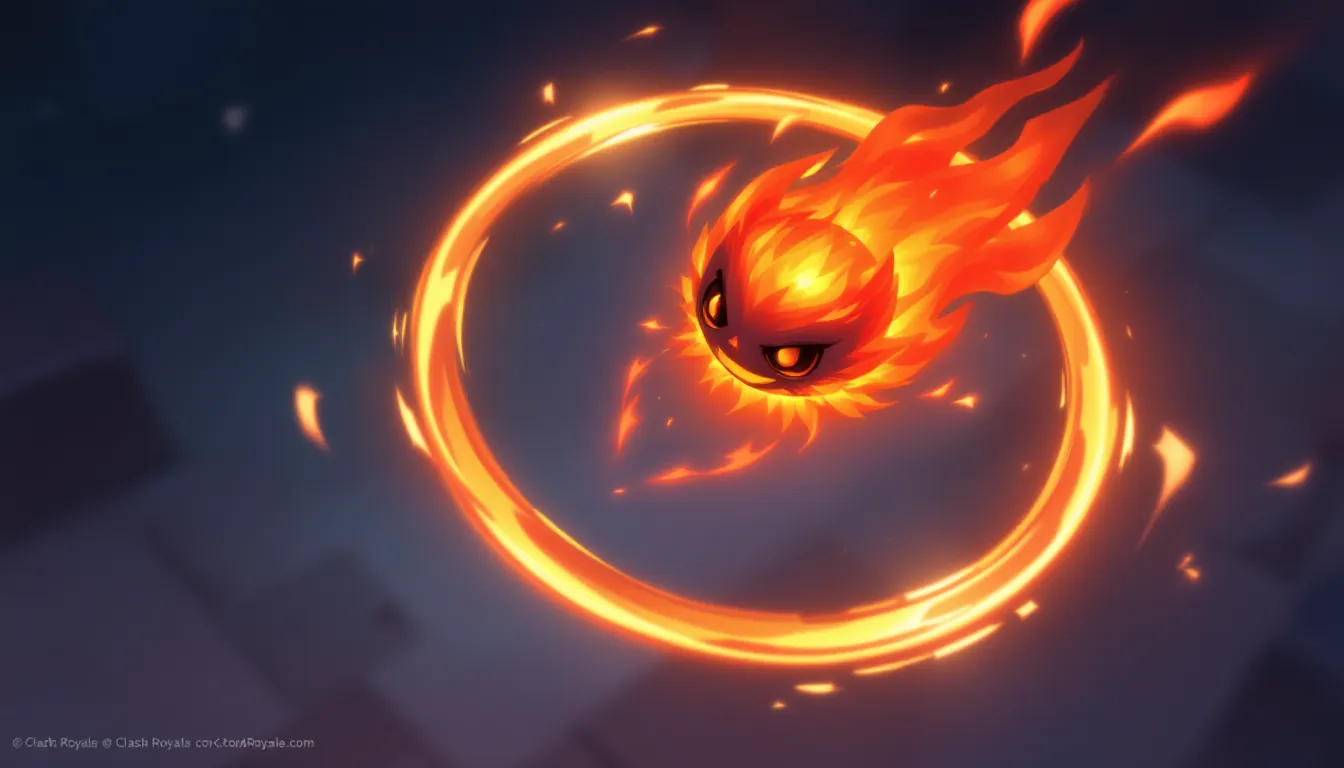
The Fire Spirit might only cost one elixir, but underestimate this explosive little menace and you’ll watch your Minion Horde vanish in a puff of smoke. Since its rework in 2021 from a three-spirit cycle to a single kamikaze unit, Fire Spirit has carved out a unique niche in the Clash Royale meta as one of the most efficient swarm counters in the game. Whether you’re running a lightning-fast cycle deck or need a cheap answer to pesky air units, this fiery suicide bomber delivers exceptional value for its minimal cost.
In 2026, Fire Spirit remains a staple in competitive ladder and tournament play, particularly in decks that demand low elixir costs and quick cycling. It’s not flashy, it won’t win you games solo, but it’ll save you four elixir when it trades into a Minion Horde and give you the tempo advantage you need to clutch that overtime push. This guide breaks down everything you need to know about Fire Spirit: its stats, optimal deck pairings, placement techniques, matchups against other spirits, and how to level it efficiently for ladder climbing.
Table of Contents
ToggleKey Takeaways
- Fire Spirit is a one-elixir Common card that delivers exceptional value through efficient swarm clearing and positive elixir trades, making it essential in competitive Clash Royale cycle decks.
- The card excels when placed predictively against swarms like Minion Horde, Skeleton Army, and air units, but struggles against single high-HP troops such as Knight or Valkyrie.
- Fire Spirit works best in ultra-low elixir cycle decks (averaging 2.5–2.8 elixir) that rely on outcycling opponent counters, particularly in Hog Cycle and Miner Control archetypes.
- Level interactions are critical—at max level, Fire Spirit one-shots Minions and Spear Goblins, but underleveled versions on ladder reduce value significantly, making timely upgrades essential.
- Countering Fire Spirit is straightforward with cheap cycle cards, spells like Zap or Log, or tanky troops that absorb the explosion, forcing players to avoid predictable placement patterns.
What Is the Fire Spirit Card?
Fire Spirit is a one-elixir Common card that spawns a single suicidal troop targeting ground and air units. It dashes toward enemies and explodes on contact, dealing area splash damage. Originally released as a trio of spirits, Fire Spirit was reworked in the June 2021 update to spawn just one unit with adjusted damage and hitpoints, making it more skill-intensive and less spammy.
Card Stats and Attributes
As of the March 2026 balance state, Fire Spirit’s tournament standard stats (Level 11) are:
- Hitpoints: 169
- Area Damage: 189
- Targets: Air & Ground
- Range: 2 tiles (jump range)
- Speed: Very Fast
- Deploy Time: 1 second
- Rarity: Common
- Elixir Cost: 1
- Death Damage Radius: 2 tiles
At max level (Level 14), Fire Spirit boasts 216 HP and 242 area damage. These numbers matter, at certain level interactions, Fire Spirit can one-shot Minions, Spear Goblins, and even survive hits from Princess or certain troops with precise timing.
How Fire Spirit Works in Battle
Fire Spirit behaves like a heat-seeking missile. Once deployed, it locks onto the nearest enemy unit within range and sprints toward it at very fast speed. Upon contact, or when destroyed mid-dash, it detonates, dealing splash damage in a 2-tile radius.
The key mechanic is its jump ability: Fire Spirit leaps over the river and can target air units, making it incredibly versatile for one elixir. It won’t retarget once locked on, so placement and timing dictate whether it connects with high-value targets or gets wasted on a single Skeleton. The splash radius means it can often catch multiple units clustered together, especially swarms like Skeleton Army, Bats, or Minions.
Fire Spirit’s Strengths and Weaknesses
Key Advantages of Using Fire Spirit
Elixir Efficiency. At one elixir, Fire Spirit delivers absurd value trades. Wiping out a three-elixir Minion Horde, four-elixir Skeleton Army, or two-elixir Bats generates massive positive elixir trades that swing momentum in your favor.
Versatility Against Air and Ground. Unlike Ice Spirit or Skeletons, Fire Spirit targets both air and ground, making it a flexible answer to Goblin Gang splits, backline support troops, or air swarms threatening your tower.
Cycle Speed. In fast cycle decks, every elixir point counts. Fire Spirit enables sub-2.6 average elixir decks, letting you outcycle opponent counters and apply relentless pressure. Players aiming to master ladder strategies often rely on one-elixir cyclers to maintain tempo.
Chip Damage and Reset Potential. While not its primary role, Fire Spirit can chip towers for 189 damage if left unchecked or disrupt charging units like Prince or Battle Ram with well-timed placement.
Limitations and Counters to Watch For
According to resources like Game8, Fire Spirit struggles against single high-HP units. A Knight, Valkyrie, or Mini P.E.K.K.A will shrug off the explosion and march on, making Fire Spirit a poor defensive option against tankier threats.
Level-Dependent Interactions. Underleveled Fire Spirits won’t one-shot Minions or Goblins, turning positive trades into neutral or even negative ones. On ladder, card levels matter more than most players admit.
Predictability. Experienced opponents anticipate Fire Spirit in cycle decks and pre-emptively counter with cheap distractions like Skeletons or Ice Spirit, denying value.
No Tower Damage Mitigation. Fire Spirit doesn’t body-block or distract effectively. Against direct damage spells or single-target DPS units like Musketeer, it offers minimal defensive utility.
Spell Bait Vulnerability. In bait-heavy metas, opponents running Log, Zap, or Arrows can cheaply nullify Fire Spirit before it connects, especially if they read your cycle.
Best Deck Archetypes for Fire Spirit
Cycle Decks
Fire Spirit thrives in ultra-low elixir cycle decks where the goal is to outcycle opponent counters and apply constant pressure. Decks averaging 2.5 to 2.8 elixir rely on Fire Spirit to handle swarms cheaply, enabling rapid win condition cycling.
Classic pairings include Hog Rider, Miner, or Rocket cycle decks that need cheap, versatile cards to maintain tempo. The one-elixir cost lets you cycle back to your win condition faster than opponents can rotate their counters, a core principle in competitive Clash Royale Pro Guides.
Bait Decks
Fire Spirit fits into spell bait archetypes that force opponents to waste their small spell on one threat, leaving others unchecked. Pair it with Goblin Barrel, Skeleton Army, and Princess to overwhelm opponents who can’t answer multiple spell-vulnerable targets.
In bait hybrids, Fire Spirit acts as both a defensive swarm counter and an offensive chip tool. If your opponent logs your Goblin Barrel, Fire Spirit can sneak tower damage or clear their counter-swarm, setting up your next barrel throw.
Beatdown and Support Strategies
While less common, Fire Spirit occasionally appears in beatdown decks as a cheap cycle card and swarm answer. Behind a Golem or Giant, Fire Spirit can preemptively clear Skeleton Army or Minion Horde, protecting your tank for one elixir.
It’s not the first choice for beatdown, most prefer Zap or Arrows for reliability, but in low-cost beatdown variants prioritizing cycle speed, Fire Spirit offers a budget-friendly alternative.
Top Fire Spirit Deck Combinations in 2026
Meta Deck #1: Fire Spirit Hog Cycle
Deck List:
- Hog Rider (win condition)
- Fire Spirit (cycle, swarm counter)
- Ice Spirit (cycle, reset)
- Skeletons (cycle, distraction)
- Cannon (defensive building)
- Musketeer (air defense, DPS)
- Log (spell)
- Fireball (spell)
Average Elixir: 2.6
This archetype is a staple of competitive play, built around cycling Hog Rider as fast as possible while defending efficiently with cheap cards. Fire Spirit handles Minion Hordes, Skeleton Armies, and Goblin Gangs that threaten your Hog pushes.
Many top players building with a Clash Royale Deck Builder prioritize this deck for its consistency and high skill ceiling. Master the cycle timing, and you’ll outcycle counters all day.
Meta Deck #2: Fire Spirit Miner Control
Deck List:
- Miner (win condition, chip)
- Fire Spirit (cycle, swarm)
- Ice Spirit (cycle, utility)
- Skeletons (cycle)
- Inferno Tower (tank killer)
- Bats (DPS, air)
- Poison (spell)
- Log (spell)
Average Elixir: 2.8
Miner control decks leverage cheap cycle cards to defend efficiently and chip towers with Miner throughout the match. Fire Spirit provides essential swarm clear on defense and occasional chip damage when sent with Miner.
This deck excels in controlling tempo and punishing overcommitments. Poison pairs well with Miner to finish towers, while Fire Spirit ensures you never fall behind on cycle.
Meta Deck #3: Fire Spirit Bait Hybrid
Deck List:
- Goblin Barrel (win condition)
- Fire Spirit (bait, swarm)
- Princess (bait, chip)
- Skeleton Army (bait, defense)
- Goblin Gang (bait, DPS)
- Rocket (spell, secondary win condition)
- Log (spell)
- Inferno Tower (tank killer)
Average Elixir: 3.0
This bait variant forces opponents into impossible choices: Log the Goblin Barrel, Princess, or Fire Spirit? Each spell-vulnerable card threatens damage or defends critical pushes, overwhelming opponents who can’t answer everything.
Fire Spirit baits out Zap or Log while also functioning as a swarm counter when opponents drop Minion Horde or Skeleton Army on your barrel. The deck shines in challenge modes where card levels are standardized.
Strategic Tips for Using Fire Spirit Effectively
Timing and Placement Techniques
Predictive Plays. Drop Fire Spirit preemptively at the bridge when you anticipate swarms like Minion Horde or Skeleton Army defending your push. If timed correctly, it’ll clear the counter before your Hog or Miner crosses the river.
Split-Lane Pressure. Fire Spirit can apply opposite-lane pressure cheaply. If your opponent commits heavy elixir on one lane, drop Fire Spirit on the other to force a response or chip 189 damage. It’s minimal investment with potential for big distractions.
Kiting and Luring. While not its primary role, Fire Spirit can lure units like Musketeer or Wizard toward the center, allowing both towers to target them. Place it reactively one tile from the river on the opposite side of the push.
Elixir Management and Trading Value
Positive Elixir Trades. Always aim to trade Fire Spirit into multi-unit swarms worth three or more elixir. One Fire Spirit deleting a Minion Horde is a three-elixir profit, which compounds over a match.
Cycle Without Wasting. Don’t mindlessly cycle Fire Spirit at the bridge if it’ll get Logged or Zapped. Wait for moments when your opponent is low on elixir or has just used their small spell. Understanding card counters helps you predict when Fire Spirit will connect.
Elixir Leak Avoidance. In double or triple elixir modes, Fire Spirit prevents elixir capping while cycling to key cards. It’s especially valuable in triple elixir challenges where every second counts.
Countering Swarms and Air Units
As noted by Twinfinite, Fire Spirit is one of the most efficient answers to Minion Horde, Skeleton Army, and Bats. Place it reactively when these swarms appear, ensuring it connects before your tower takes significant damage.
Against Goblin Gang: Fire Spirit one-shots the Spear Goblins but won’t kill the Stab Goblins at equal levels. Still, it weakens them enough for your tower to finish quickly.
Against Minions: At equal levels, Fire Spirit one-shots Minions. Underleveled, it requires tower assistance, so upgrade accordingly for ladder.
Against Graveyard: Fire Spirit can clear multiple Skeletons spawned by Graveyard, though it’s inconsistent. Use it as supplementary splash, not your primary Graveyard counter.
Fire Spirit vs. Other Low-Cost Spirits
Fire Spirit vs. Ice Spirit
Ice Spirit costs one elixir and offers a freeze effect, slowing and stunning all units in its splash radius for one second. It’s better for defensive resets, stopping a charging Prince, delaying a push, or cycling cheaply.
Fire Spirit deals damage instead of stun, making it superior against swarms and air units. Ice Spirit doesn’t kill Minions or Goblins outright but buys time for your tower or troops to finish them.
When to Use Fire Spirit: Against swarm-heavy decks (Bait, Graveyard), or when you need air coverage without investing in a three-elixir card.
When to Use Ice Spirit: Against single-target threats, charging units, or when you need chip damage plus utility (Ice Spirit hits the tower for 91 damage and freezes it briefly).
Many cycle decks run both for maximum versatility, but if forced to choose, Fire Spirit offers better swarm clear while Ice Spirit provides better tempo disruption.
Fire Spirit vs. Electro Spirit
Electro Spirit also costs one elixir and stuns enemies on contact, resetting Inferno Dragon, Sparky, or charging units. It jumps instantly to the nearest target and chains damage to nearby enemies, similar to Zap.
Fire Spirit deals higher raw damage and excels at deleting swarms outright, while Electro Spirit offers utility through resets and chain damage. According to Pocket Tactics, Electro Spirit sees more use in decks facing reset-heavy matchups like Inferno Dragon or Sparky.
When to Use Fire Spirit: Against Minion Horde, Skeleton Army, Bats, or when raw damage is needed.
When to Use Electro Spirit: Against Inferno troops, Sparky, charging units, or when you need a cheap reset mechanic.
Fire Spirit remains the swarm king, but Electro Spirit’s versatility makes it a strong alternative depending on the meta. In 2026, both see competitive play, often in different archetypes tailored to their strengths.
How to Counter Fire Spirit
Countering Fire Spirit is straightforward but requires anticipation and proper elixir management.
Cheap Cycle Cards. Drop Skeletons, Ice Spirit, or another one-elixir card to absorb the Fire Spirit explosion. This trades even on elixir but denies your opponent value and disrupts their cycle.
Spells. Zap, Log, or Arrows instantly destroy Fire Spirit mid-dash. While this is an even elixir trade, it prevents Fire Spirit from clearing your push or cycling your opponent’s deck. In bait matchups, save your spell for higher-priority threats like Goblin Barrel.
Single-Target Troops. Knight, Valkyrie, Ice Golem, or any tanky troop absorbs the Fire Spirit explosion without dying. This is a slight elixir loss (two to four elixir vs. one) but keeps your defensive unit alive to counterpush.
Preemptive Swarm Splitting. If you anticipate Fire Spirit, split your Goblin Gang or Minions across both lanes. Fire Spirit can only hit one cluster, leaving the other half alive to pressure.
Prediction Denial. If your opponent predictively drops Fire Spirit, counter with an immediate cheap distraction or spell. Predictive plays are high-risk for Fire Spirit users, punish overconfidence by reading their patterns.
Distance and Timing. Deploy swarms deeper in your territory, forcing Fire Spirit to travel farther. This gives your towers more time to chip it down before it connects, potentially killing it before detonation.
Fire Spirit thrives on predictability. Mix up your swarm placements, vary your defense timings, and don’t fall into repetitive patterns that let your opponent farm easy value.
Upgrading and Leveling Fire Spirit
As a Common card, Fire Spirit is one of the easiest cards to max in Clash Royale. You’ll accumulate Fire Spirits quickly through chests, shop purchases, and trade tokens, making it a ladder-friendly investment.
Priority for Ladder. If you’re running Fire Spirit in your main ladder deck, prioritize upgrading it to match your card levels and opponents’ troop levels. Level interactions are critical, an underleveled Fire Spirit won’t one-shot Minions, Goblins, or Spear Goblins, drastically reducing its value.
Gold and Card Requirements. Maxing Fire Spirit from Level 1 to Level 14 requires:
- 9,586 Cards
- Approximately 100,000 Gold (total upgrade cost)
These numbers make it far more affordable than upgrading Rares, Epics, or Legendaries. If you’re budget-conscious or F2P, maxing Fire Spirit early provides consistent value across multiple deck archetypes.
Card Request Strategy. Request Fire Spirits from your clan regularly. As a Common, you can request 40 cards every eight hours in most clans, accelerating your upgrade path significantly.
Book of Cards and Wild Cards. Save Books of Commons and Wild Cards for higher-priority Commons like Skeletons or Ice Spirit if you run multiple in your deck. Fire Spirit benefits from these resources but isn’t game-breaking enough to warrant exclusive use unless it’s your deck’s linchpin.
Tournament Standard vs. Ladder. In tournament standard modes (Challenges, Global Tournaments), Fire Spirit is capped at Level 11, meaning interactions are consistent. On ladder, but, facing overleveled Minions or underleveled Fire Spirits shifts matchups dramatically. Invest in Fire Spirit if ladder climbing is your priority.
Star Levels. Fire Spirit offers three Star Levels for cosmetic upgrades. While purely aesthetic, they signal mastery and dedication to the card, a small flex for Fire Spirit mains.
Conclusion
Fire Spirit punches way above its one-elixir weight class. It’s not flashy, it won’t clutch impossible defenses, but in the hands of a skilled player, it generates game-winning elixir advantages and enables some of the fastest, most oppressive cycle decks in Clash Royale. Whether you’re running Hog Cycle, Miner Control, or Bait, Fire Spirit delivers consistent value when deployed with precision and game sense.
Master its timing, understand level interactions, and never underestimate the power of a positive elixir trade. In a game where every elixir point matters, Fire Spirit is the little kamikaze that could, and often does.