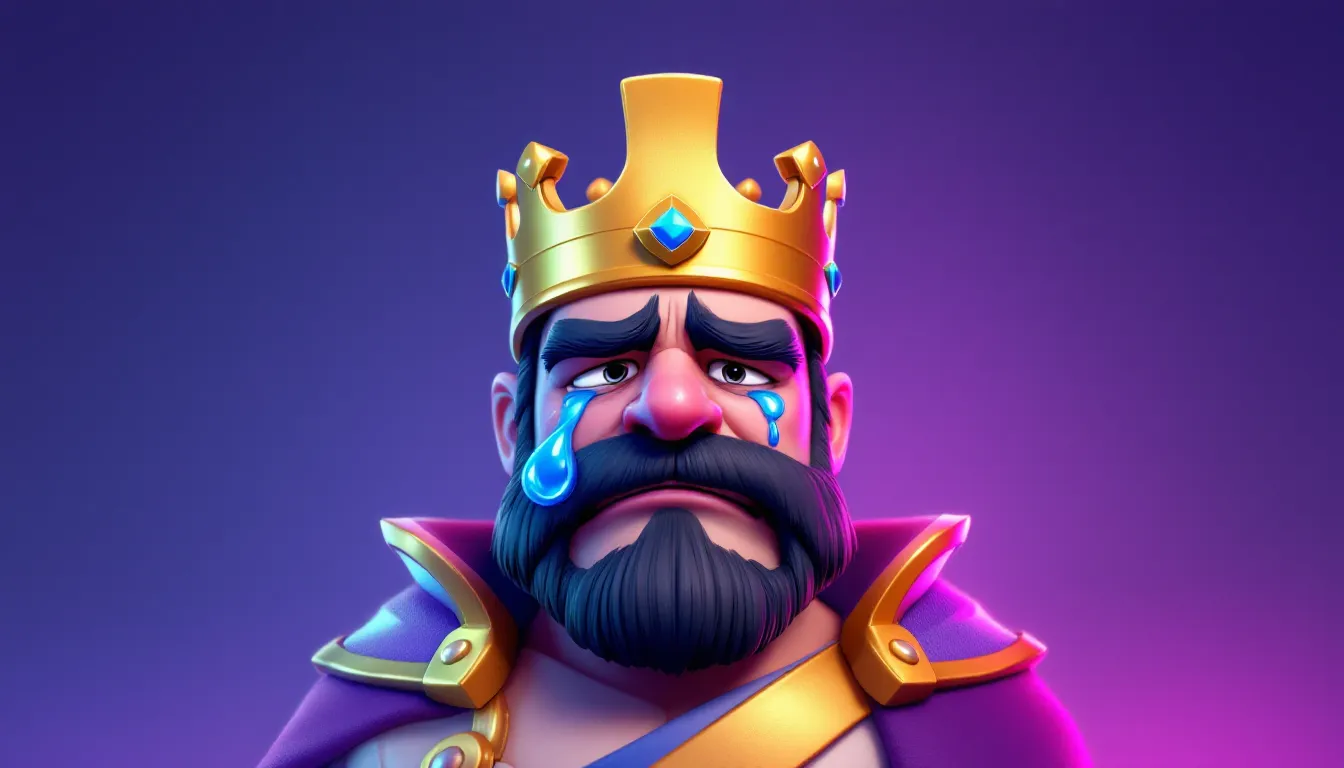
If you’ve spent any time in Clash Royale’s arenas, you’ve seen it. That single blue tear rolling down the King’s face. Maybe it appeared after you dropped three spells in a row trying to finish off a tower. Maybe your opponent flashed it after their Mega Knight got wrecked by a well-placed Inferno Dragon. Or maybe, just maybe, you’ve spammed it yourself after losing to a Level 14 Electro Giant when you’re sitting at King Level 11.
The King Crying emote isn’t just a reaction. It’s a language all its own. It’s mocking, empathetic, strategic, and sometimes all three at once. In 2026, it remains one of the most recognizable and versatile emotes in Clash Royale, transcending the game itself to become a full-blown meme across gaming communities. Whether you’re curious about its origins, hunting down how to unlock it, or just want to know when it’s socially acceptable to BM with it, this guide covers everything you need to know about the crying king phenomenon.
Table of Contents
ToggleKey Takeaways
- The Clash Royale King Crying emote serves multiple purposes—from expressing genuine frustration and defeat to tactical psychological warfare and showing sportsmanship—making it the game’s most versatile and recognizable emote.
- Since its debut in May 2017, the Crying King has evolved into a full-blown meme and cultural phenomenon, transcending the game to become a universal reaction image across gaming communities, Reddit, TikTok, and esports coverage.
- Players can unlock the Crying King emote in 2026 through shop rotations (250 gems), special challenges, seasonal passes, or clan-based events, with multiple variants now available including Goblin, Princess, Hog Rider, and Golden Knight versions.
- In competitive esports, the Crying King has produced legendary moments that demonstrate sportsmanship and mental composure, while esports pros strategically use it mid-match to apply psychological pressure or acknowledge brutal plays without appearing overly toxic.
- To counter emote-based tilting, players can mute emotes entirely, respond selectively with well-timed emotes after strong plays, or recognize tilt patterns and focus on gameplay fundamentals rather than opponent reactions.
What Is the Clash Royale King Crying Emote?
The Crying King emote features the player’s King Tower avatar with a single teardrop streaming down his cheek, eyes glistening with sorrow. It’s part of Clash Royale’s emote system, a collection of animated reactions players can use during matches to communicate emotions, taunt opponents, or respond to in-game events.
Unlike text chat (which Clash Royale intentionally omits to reduce toxicity), emotes are the primary form of player-to-player interaction during a match. The Crying King sits in a unique emotional space: it can express genuine sadness after a brutal loss, mock an opponent’s failed push, or even show sympathy when RNG screws someone over.
What makes this emote special is its ambiguity. Context is everything. Flash it after your opponent’s Goblin Barrel gets zapped for the third time in a row? That’s BM. Use it when your own push gets obliterated by a perfectly timed Rocket? That’s self-deprecation. Send it after a close, well-fought match? That’s sportsmanship (sort of). This flexibility has made the Crying King one of the most-used emotes in the game, with players cycling through it multiple times per match across all trophy ranges.
The Origins and History of the Crying King
When the Crying King First Appeared
The Crying King emote debuted in May 2017 as part of the game’s ongoing emote expansion. Supercell introduced it in a special emote pack during a limited-time shop offer, which also included the Laughing King and a few other reactive emotes. At launch, it cost 250 gems, making it a semi-premium cosmetic that required either grinding or paying real money.
In its first few months, the emote didn’t stand out much. Players were still figuring out emote etiquette, and the Laughing King dominated as the go-to BM tool. But as the meta shifted and the community grew more comfortable with emote-based communication, the Crying King found its niche. By late 2017, streamers and YouTubers began using it strategically, sometimes as an ironic response, sometimes to tilt opponents, and its usage exploded.
Supercell re-released the emote periodically through shop rotations, special challenges, and event rewards, gradually making it more accessible. By 2020, it had become common enough that nearly every mid-to-high-level player owned it.
How the Emote Became a Cultural Phenomenon
The Crying King’s rise to meme status wasn’t accidental. It coincided with Clash Royale’s peak popularity on Twitch and YouTube, where top players like CWA, SirTag, and Surgical Goblin incorporated emotes into their entertainment value. The crying face became shorthand for “oof,” “yikes,” or “that’s rough, buddy”, a universal reaction to disaster.
Outside the game, the emote spread to Reddit, Twitter (now X), Discord, and TikTok. Players started using screenshots of the Crying King as reaction images in non-gaming contexts. It became a symbol of relatable failure, joining the ranks of other gaming memes like “Press F to Pay Respects” or “Git Gud.”
By 2023, major esports coverage on platforms like IGN and community hubs began referencing the emote in tournament recaps and highlight reels. When a pro misplays or gets hard-countered on stream, the chat floods with Crying King emojis. It’s become part of the game’s identity, a shorthand that transcends language barriers and unites the global Clash Royale community in shared schadenfreude.
Why Players Use the King Crying Emote
Expressing Frustration and Defeat
At its core, the Crying King is an outlet. Clash Royale can be brutally unfair. You can draft the perfect counter deck, execute flawlessly, and still lose to a Level 14 Ebarbs + Rage push because your opponent out-leveled you by three King Levels. When that happens, words don’t cut it. The crying face does.
Players use it to vent after bad matchups, to signal “GG, I’m cooked,” or just to acknowledge the chaos. It’s cathartic. Instead of rage-quitting or tilting into oblivion, dropping a Crying King lets you externalize the frustration and move on. In this sense, it’s almost therapeutic, a digital sigh that says, “Yeah, that sucked.”
Tactical BM and Psychological Warfare
Let’s be real: emotes are weaponized. The Crying King is one of the most effective tilt tools in the game. Drop it right after your opponent wastes elixir on a failed push, and you’re not just reacting, you’re applying pressure. You’re saying, “I saw that mistake, and I’m about to punish it.”
Good players understand that emotes can tilt opponents into overcommitting or making rash decisions. A well-timed Crying King after a big elixir trade can bait someone into revenge-pushing, leaving them vulnerable to a counter. Whether that’s ethical is debatable (emote BM has sparked endless Reddit threads), but it’s undeniably effective when constructing a Clash Royale deck that capitalizes on opponent mistakes.
Some players mute emotes entirely to avoid this. Others embrace the chaos. The psychological meta is real, and the Crying King is its most versatile tool.
Showing Empathy and Sportsmanship
Not all Crying King usage is toxic. Sometimes, it’s genuinely empathetic. If your opponent’s Balloon gets tornadoed into the King Tower activation at the worst possible moment, dropping a Crying King is a way of saying, “Damn, that’s rough. I feel for you.”
In close matches where both players are fighting hard, a mutual exchange of Crying Kings after a crazy interaction (like a Rocket sniping a low-HP win condition mid-charge) can be a moment of shared appreciation. It’s the gaming equivalent of a knowing nod.
Some tournament players even use it as a “GG” alternative, especially after a tough loss where the match could’ve gone either way. It’s less smug than a thumbs-up, more gracious than a Laughing King. Context is king (pun intended), and reading the room, er, arena, is crucial.
How to Get the Crying King Emote in 2026
As of March 2026, there are several ways to unlock the Crying King emote, depending on how much time or money you’re willing to invest.
Shop Rotation: The emote appears periodically in the in-game shop as part of emote bundles or standalone offers. These typically cost 250 gems or around $2.99 USD if purchased directly with money. Shop rotations are semi-random but tend to cycle popular emotes every few weeks.
Special Challenges: Supercell occasionally features the Crying King as a reward in limited-time challenges. These events usually require a certain number of wins (often 10-12 in Classic or Grand Challenge format) and may have an entry fee of 10-100 gems. Skill-based unlocks are the most satisfying, and competitive players often prefer this route.
Season Pass: The Crying King has appeared in past season passes (roughly Seasons 18, 32, and 47), unlocked at various tiers. If you’re an active player who purchases the Pass Royale (currently $4.99 USD per month), this is one of the most cost-effective ways to collect emotes over time. Keep an eye on season previews to see if it’s included.
Emote Packs and Events: Supercell runs seasonal events tied to holidays or game anniversaries. The Crying King sometimes shows up in these bundles, often packaged with other King emotes. During major updates or crossover events, these packs can be discounted or offered as bonus rewards.
Trade Tokens and Clan Perks: While emotes aren’t directly tradeable, some clan-based events and perks have allowed players to earn bonus shop discounts or exclusive unlocks. It’s rare, but worth checking if your clan is active in Clan Wars or tournaments focusing on Clash Royale challenges.
Bottom line: if you don’t have it yet, patience and 250 gems (or a season pass) will get you there. It’s not as exclusive as it was in 2017, but it’s still a must-have for anyone serious about emote game.
Different Variations of the Crying King Emote
Classic Crying King
The original Crying King is the blue-crowned, sad-faced monarch with the single tear. It’s the baseline, the OG, the one everyone recognizes. Its simplicity is its strength, no flashy animation, just pure, distilled sorrow. Whether you’re using it after a loss or deploying it mid-match as psychological warfare, this is the version that started it all.
It’s worth noting that the Crying King adapts to your active King Tower skin. If you’ve unlocked custom tower aesthetics through the shop or events, your crying monarch will match that theme. A small detail, but one that adds personalization for players who’ve invested in cosmetics like tower skins.
Goblin Crying and Other Crying Variants
Supercell loves milking a good emote, so naturally, the Crying King spawned a whole family of crying-themed reactions.
Goblin Crying: Introduced in late 2019, this variant features a green Goblin shedding a tear. It’s slightly more comedic than the King version, the Goblin’s exaggerated expression makes it feel less serious and more meme-y. Players often use it in situations where the loss is absurd or hilarious rather than genuinely frustrating.
Princess Crying: Released in 2021, this emote shows the Princess (from the Princess Tower) tearing up. It’s less common than the King or Goblin versions but sees use in niche contexts, particularly when someone’s win condition gets hard-countered or a crucial defensive building gets Fireballed at the worst moment.
Hog Rider Crying: A newer addition (2024), this one shows the Hog Rider with a single tear as his hog snorts sadly in the background. It’s peak absurdity and quickly became a favorite for players who main Hog cycle decks. It’s basically a self-deprecating “my win condition is dead” emote.
Golden Knight Crying: Part of the Champions emote set (2025), this variant shows the Golden Knight shedding a tear in slow motion. It’s flashier and more dramatic, appealing to players who want their BM to have production value.
Each variant has its own vibe, but the classic Crying King remains the most iconic. The others are fun flavor, but nothing hits quite like the original.
The King Crying Emote in Esports and Competitive Play
Famous Moments Featuring the Crying King
The Crying King has had its share of legendary esports moments. During the 2022 Clash Royale League World Finals, Spanish pro player Sergi “Sergioramos:)” Ramos dropped a Crying King after narrowly losing a tiebreaker match to reigning champion Mohamed “Morten” Morténius. The crowd erupted, and the moment became a GIF that circulated on Twitter for weeks. It was the perfect encapsulation of competitive heartbreak, gracious, self-aware, and utterly relatable.
In CRL West 2021, North American player “Javi” used the Crying King mid-match after his opponent’s Lightning spell sniped both his Musketeer and Electro Wizard in one shot. The casters couldn’t stop laughing, and the clip was featured in multiple highlight reels covered by outlets like Game Rant. It wasn’t just funny, it was a masterclass in staying composed under pressure while acknowledging a brutal play.
More recently, at the 2025 Crown Championship, Korean player “Kylo” spammed the Crying King after losing to a last-second Miner chip cycle. His opponent responded with a respectful Crying King back, and the exchange became a symbol of sportsmanship in the competitive scene. Moments like these show that emotes, when used right, add personality and humanity to high-stakes matches.
Tournament Etiquette and Emote Rules
In official Supercell-sanctioned tournaments and Clash Royale League events, emote usage is generally unrestricted, players can BM to their heart’s content. But, unwritten etiquette exists. Most pros avoid excessive emote spam, especially early in a match, to maintain focus and avoid looking desperate for a mental edge.
Some third-party tournaments and community-run events have implemented emote limits or emote bans for specific rounds, particularly in formats where tilt management is critical (like best-of-five sudden death matches). Organizers argue that excessive BM can distract from skill expression and turn matches into tilt wars rather than strategy showcases.
That said, many top players embrace emotes as part of their brand. Streamers and content creators often lean into BM for entertainment value, and fans expect it. The Crying King occupies a sweet spot, it’s expressive without being as obnoxious as spamming the Laughing King or the Chicken emote. Competitive players climbing the ladder ranks often adopt it as their signature closer after a tough win.
If you’re playing in a tournament, the golden rule is: match your opponent’s energy. If they’re emoting, feel free to respond. If they’re silent, maybe keep it classy. Or don’t, esports BM is part of the spectacle.
The Meme Culture Around King Crying
The Crying King transcended Clash Royale years ago. It’s become a universal reaction image across gaming subreddits, Discord servers, and social media. Reddit’s r/ClashRoyale community uses it to react to everything from bad balance changes to personal ladder tilt stories. It’s shorthand for “I’m in pain, but I’m laughing about it.”
On TikTok, creators splice Crying King clips into videos about IRL fails, dropping your phone, missing the bus, getting ghosted. The emote’s exaggerated sadness makes it perfect for hyperbolic humor. One viral TikTok in late 2025 paired the Crying King with the “Curb Your Enthusiasm” theme after a player BM’d too early and then lost. It racked up 3 million views in a week.
Twitter users have turned the emote into a reaction GIF for game patch notes. Whenever Supercell nerfs a popular card or buffs something controversial (looking at you, Electro Giant), the replies flood with Crying King images. It’s become the community’s default response to unwanted changes, part protest, part acceptance of the grind.
Meme accounts on Instagram and YouTube regularly feature the Crying King in compilations of “worst Clash Royale moments” or “when RNG hates you.” The emote’s simplicity makes it endlessly remixable. Fans have created custom versions: Crying King with Pepe the Frog’s face, Wojak-style Crying King, even a Crying King deepfake set to sad music. The creativity is endless.
Analysts at mobile gaming communities like Pocket Tactics have noted that the Crying King’s meme longevity is tied to its emotional authenticity. Unlike more aggressive emotes (Laughing King, “Thanks.”), the Crying King feels human. It’s vulnerable. And in a hyper-competitive mobile game full of frustration, vulnerability is strangely comforting.
In 2026, the Crying King isn’t just a Clash Royale emote, it’s a mood. And that’s why it’s never going away.
Best Situations to Use the King Crying Emote
When You’re Losing Badly
If you’re down two towers, your opponent has a 20-elixir advantage, and they just dropped a Golem in the back with a Mega Minion behind it, the match is over. You know it. They know it. This is the perfect time to drop a Crying King. It’s your white flag, your “GG, you got me,” your acknowledgment that sometimes the matchup is just doomed.
Using the Crying King here isn’t admitting weakness, it’s demonstrating self-awareness. Plus, it can sometimes defuse a potential BM storm from your opponent. If you cry first, they’re less likely to spam Laughing King or chicken emotes. It’s the emote equivalent of taking the high road while still expressing that, yeah, this sucks.
After Your Opponent Makes a Mistake
Your opponent just Fireballed your King Tower instead of your Musketeer. Or they played Goblin Barrel directly into your pre-placed Log. Or they panicked and Rocketed your full-HP Princess Tower for 493 damage. These are prime Crying King moments, not mean-spirited, just… acknowledging reality.
This usage walks the line between empathy and BM. You’re not laughing at them (that’s what the Laughing King is for). You’re crying for them. It’s the emote equivalent of “oof, that’s rough.” Just don’t overdo it. One Crying King is funny. Three in a row is toxic, especially when combined with other strategies found in pro guides.
When RNG Doesn’t Go Your Way
RNG moments in Clash Royale are rare but devastating. Your opponent’s Electro Giant’s zap effect stuns your Inferno Dragon at the exact worst millisecond. Your Goblin Gang targets the tank instead of the support troop for no discernible reason. Your Miner lands in the one tile that lets the Princess Tower target it immediately.
These are the moments the Crying King was made for. You’re not mad at your opponent, you’re mad at the game. Dropping a Crying King here is pure catharsis. It’s you vs. the universe, and the universe just dunked on you. Your opponent will usually sympathize (sometimes they’ll even cry back), because everyone’s been there.
Bonus points if you’re in a chaotic game mode like Triple Elixir, where RNG and spam collide in beautiful, frustrating chaos. The Crying King is basically the unofficial mascot of that mode.
How to Counter Emote Spam and Tilting
Emote spam is psychological warfare, and the Crying King is one of the most effective tilt tools in the game. If your opponent is spamming it after every elixir trade, every defensive stop, every minor mistake you make, it’s designed to get under your skin. Here’s how to counter it.
Mute emotes immediately. The most straightforward solution. Tap the emote button in the top-left corner, then hit the mute icon. No emotes, no tilt, no problem. Purists argue this removes flavor from the game, but if you’re on a losing streak and one more Crying King might make you throw your phone, mute away. Zero shame.
Return fire selectively. If you’re confident in your mental game, emote back, but only when you make a good play. Don’t spam. Don’t panic-emote. Wait for a big defensive stop or a clutch counter-push, then drop a single, well-timed emote (Crying King, Laughing King, whatever fits). This shows your opponent their BM isn’t working, and you’re still in control.
Recognize the tilt pattern. If you notice your gameplay getting sloppy after emote spam, overcommitting on offense, misplacing troops, wasting spells, pause for a second. Take a breath. Remind yourself that emotes are just pixels. Your opponent wants you tilted because it makes you easier to beat. Don’t give them that edge, especially when countering key cards requires precision.
Use it against them. If your opponent is emote-spamming and you turn the match around, the comeback Crying King is devastating. They’ve spent three minutes BMing you, and now they’re the ones getting wrecked. Drop a Crying King right after you take their first tower, then go silent. Let the reversal speak for itself.
Embrace the chaos. Some players just accept that emotes are part of Clash Royale’s culture. They emote back, lean into the banter, and treat matches like a boxing weigh-in with trash talk. If you can do this without tilting, it makes the game more fun. Just know your limits.
Eventually, emotes are cosmetic. They don’t affect tower HP, troop stats, or elixir generation. If your opponent is spending mental energy spamming emotes, that’s brain power they’re not spending on optimal play, especially in tight situations involving trade tokens or card-level advantages. Stay calm, play your game, and let your tower count do the talking.
Conclusion
The King Crying emote is more than just a reaction, it’s a cultural artifact of Clash Royale’s evolution. From its debut in 2017 to its current status as a meme, a tilt tool, and a symbol of shared gaming misery, it’s carved out a permanent place in the game’s identity. Whether you use it to cope, to BM, or to build camaraderie with an opponent after a brutal match, the Crying King speaks a universal language.
In 2026, it’s as relevant as ever. New players discover it and instantly understand its power. Veterans wield it with surgical precision. Esports pros flash it in million-view tournament streams. And somewhere, right now, someone just lost to Ebarbs Rage and is spamming that little blue tear for the fourth time this match.
That’s Clash Royale. That’s the Crying King. And honestly? We wouldn’t have it any other way.